
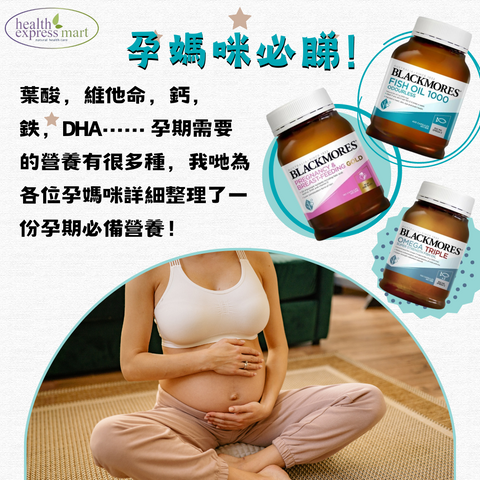
During pregnancy, you need to supplement nutrients for both yourself and your baby. What you consume daily not only affects your health but also your baby's development and growth. You must be cautious about nutrient intake and know how much of each nutrient to supplement.
- First Trimester (1-3 months): Folic acid, Vitamins
Vitamins D, E, and B complex (B1, B2, B6, B12) are all important nutrients that pregnant mothers must take. They can be obtained from natural foods or directly supplemented with multivitamin health supplements to ensure adequate nutritional intake.
- Second Trimester (4-6 months): DHA, Calcium, Protein
- Third Trimester (7-9 months): Iron, Vitamins
Due to blood dilution and the growth and development needs of the fetus, the iron requirements for expectant mothers will increase. Iron can replenish blood, helping mothers and babies prevent anemia and avoiding adverse effects on the health of both mother and fetus. The entire process of fetal development requires vitamins, so expectant mothers should also pay attention to supplementing various vitamins in the third trimester. For example, Vitamin D is beneficial for calcium absorption and baby's bone development, and Vitamin K can prevent postpartum discomfort for pregnant women.
Comprehensive nutrient supplements are better than supplementing multiple nutrients individually. Multivitamins are not only beneficial for a comprehensive intake of minerals and vitamins but also avoid the side effects caused by stacking multiple individual nutrient supplements.
Generally, it is difficult to meet a mother's nutritional needs during pregnancy through daily diet alone. Therefore, when choosing prenatal nutrition, you can pay extra attention to supplementing the vitamins and minerals that your body lacks.
In addition, 1-3 years old is a golden period for babies' growth and development, and it is important to ensure that children absorb sufficient and balanced nutrition. For babies who are picky eaters or have poor absorption, multivitamin supplementation can be considered. Besides, DHA fish oil helps children's intellectual and visual health development, so in addition to a balanced diet, mothers can also ensure their children consume enough DHA.
References:https://mamiguide.com/article/nutritional-supplements-during-pregnancy/
https://family.esdlife.com/content/%E5%AD%95%E5%A9%A6%E7%87%9F%E9%A4%8A%E8%A3%9C%E5%85%85%E5%93%81Supplement%E6%8E%A8%E8%96%A6-%E6%87%B7%E5%AD%95%E6%9C%9F%E5%BF%85%E9%9C%80%E7%87%9F%E9%A4%8A%E7%B4%A0